Data informed, people centered, life changing

Quantifying the challenges of recovery is equally as compelling as the life stories that inspire all of our teams every day.

From spinal cord and brain injury to multiple sclerosis and assistive technology, we are using data science, analytics, machine learning, and AI to inform clinical care and improve the lives of people with complex injuries and chronic conditions.

Our strength lies in our cross-disciplinary collaboration. Data scientists, biostatisticians, clinicians, therapists, and engineers work side by side, sharing insights in real-time, so discoveries move from analysis to application without delay. This integrated model ensures that every innovation, from predictive models to patient tools, is informed by data, shaped by clinicians, and driven by patient experience.

We’re not methods-driven, we’re mission-driven. As long as our work goes back to our central mission of helping people with disabilities thrive, then innovation at Shepherd Center is inevitable.

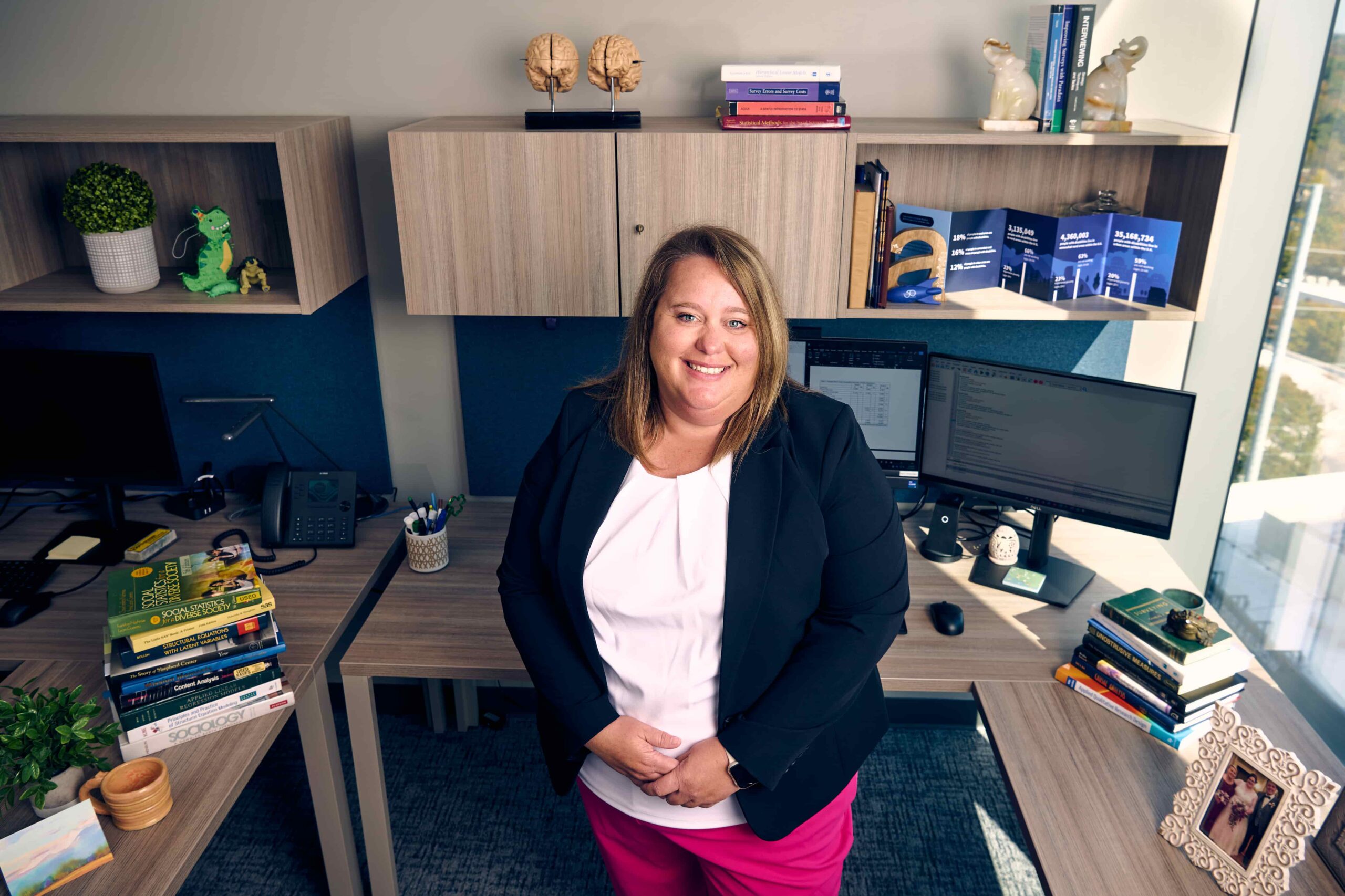
Raeda Anderson, Ph.D. Lead Statistician, Virginia C. Crawford Research Institute at Shepherd Center

Why Industry and academic partners choose Shepherd

Integration across clinical care

Our collection of data and analysis is woven into the daily work of every Shepherd clinician, therapist, engineer, and researcher. Whether it’s predicting which patients are most likely to respond to a specific treatment, building smarter interactive dashboards to speed up clinical decision-making, or translating patient feedback into tangible adjustments, the analytics team is everywhere — by design.

  • Quantifying outcomes across rehabilitation programs and trials
  • Testing new digital tools (like PT Pal and patient dashboards)
  • Creating real-time feedback loops for clinicians and researchers
  • Using mixed-methods research (quantitative and qualitative) to center the patient experience

Unlike traditional analytics units, Shepherd’s team stays embedded, checking in with clinicians regularly, refining outputs based on lived clinical experience, and shortening the time from insight to application.

Interdisciplinary mindset

Our team brings a rare mix of academic depth, clinical access, and real-time responsiveness. Team members hold advanced degrees in sociology, psychology, epidemiology, biostatistics, and computer science, as well as professional backgrounds in academia, public health, and high-tech industries. They regularly collaborate on multi-site studies and state-level contracts.

  • Projects are shaped by a mission-first, not method-first philosophy
  • The team specializes in deriving insights through an integrated approach that blends common research data sources such as surveys, clinical measures, and patient-reported outcomes with non-traditional data like EMRs and telemetry.
  • The culture encourages innovation, and failure, as a critical aspect of innovation
  • Analytical tools are designed to scale beyond Shepherd, influencing models used nationally
  • Mixed-method research ensures that patient, clinician, and stakeholder feedback loops are integrated and assessed

Sharing what works, when it works

At Shepherd Center, discoveries don’t sit on a shelf. Whether it’s a new therapy technique, a proven device, or an evidence-based clinical tool, our teams are committed to getting what we learn quickly into the hands of the people who need it most. That includes patients, providers, caregivers, and partners across the country.

  • Offering consultations to clinics, hospitals, product developers, startups, and research institutions seeking real-world input
  • Hosting trainings and professional education programs for researchers, therapists, physicians, and students
  • Sharing insights through peer-reviewed publications, national conferences, white papers, and webinars
  • Partnering with tech companies to co-design and test accessible solutions based on frontline experience
  • Engaging with community rehab centers to replicate and scale proven programs

A middle-aged man with short gray hair and a goatee smiles slightly while wearing a navy zip-up jacket with red stripes. He stands outdoors with cloudy skies and distant mountains in the background.

Humans see in three dimensions. AI can look at something in 5,000 dimensions, 10,000 dimensions, 15,000 dimensions at the same time. What AI and machine learning does is give us the ability to ‘see things’ that we can’t see otherwise.

George Collier, Ph.D. Senior Data Scientist, Virginia C. Crawford Research Institute at Shepherd Center

Developing system models, machine learning, and AI-assisted analysis

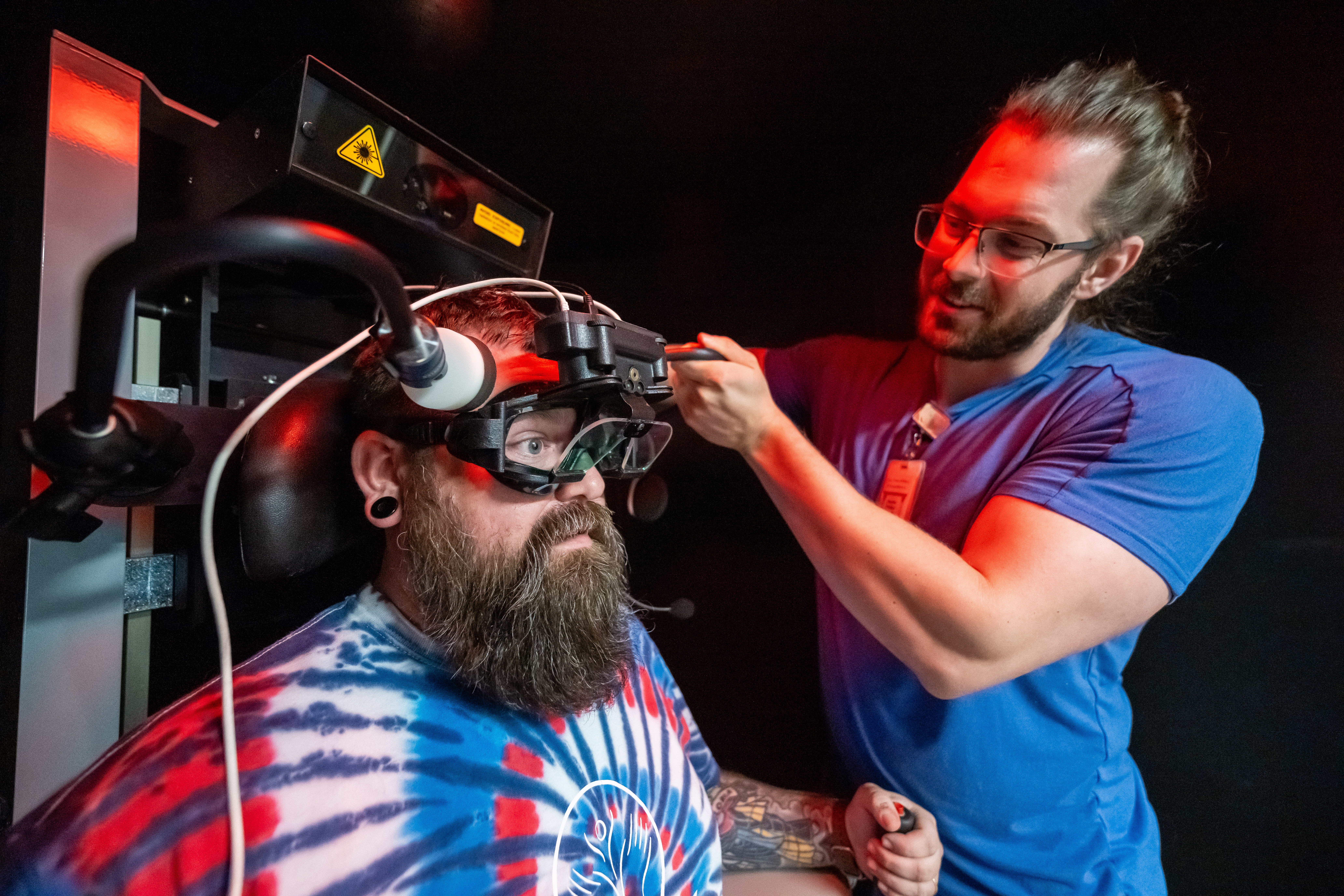
From remote patient monitoring to predictive rehabilitation outcomes, our engineers are developing systems that incorporate machine learning and AI to enhance our approach. Using high-frequency telemetry data from gait labs, wearable sensors, and treatment logs, the team has developed models that can:

  • Identify critical treatment variables (e.g., ankle flexibility in walking rehab).
  • Guide clinicians toward more personalized treatment paths.
  • Incorporate complex, multi-faceted data collection across disciplines.

The models, machine learning, and AI work isn’t detached from the human experience. It’s grounded in clinician insight, shaped by real-world constraints, and built with equity and bias awareness at the forefront.

A woman in a black blazer and pink pants stands smiling in a modern office with desks, computer monitors, books, plants, and decorative items, including brain models and awards, visible around her.

Meet the Data Science & Analytics team

Dr. Raeda Anderson is our Lead Data Analyst Expert in health and family systems, social determinants of health, rural health, and survey methodology.