Where innovation meets rehabilitation

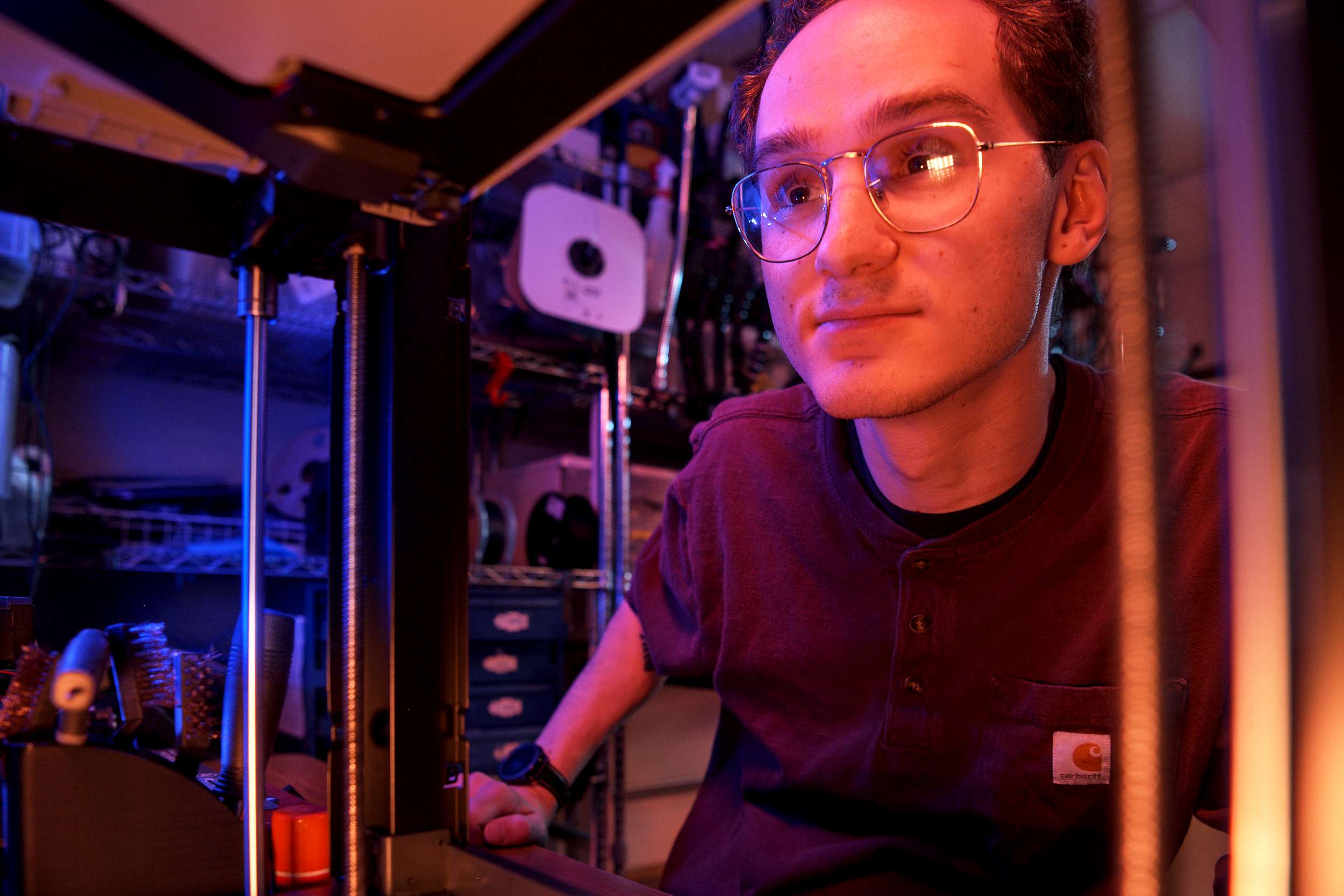
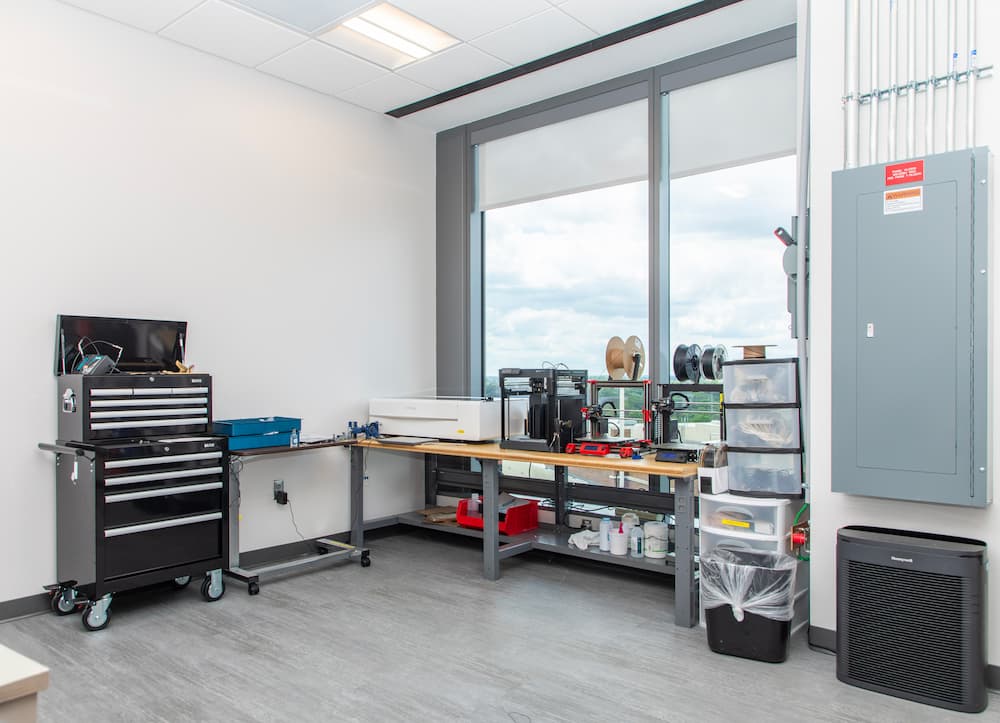
The Assistive Technology Workshop (AT Workshop) at Shepherd Center’s James M. Cox Innovation Institute is a dedicated space for creativity and collaboration.

Located within the Center for Assistive Technologies, the workshop serves as a dedicated space for designing and building assistive technologies and rehabilitation solutions. Here, projects move from concept to prototype, ensuring practical tools that support patient care and enhance independence.

The process involves brainstorming and iterative prototyping using advanced tools, like 3D printing, to create or refine devices that improve mobility, independence, and daily living activities.
No one at Shepherd is doing research for research sake. There are clinical problems that need to be solved, questions that need answers. That’s why our researchers are integrated into the clinics and labs — to find those solutions for our patients.

Elise Kirby, MBA, MHA, MSOT, OTR/L, CLT-LANA Innovation Project Manager

How we bring new products to life

The path from concept to implementation begins with clinician problem-solving — often shared informally during real-time therapy. These ideas may lead to device modifications or prototypes that are evaluated through formal clinician and patient testing.

Specific products under development or recently prototyped include:

  • Customized adaptive aids such as utensils, writing aids, and feeding aids are designed specifically to compensate for motor impairments.
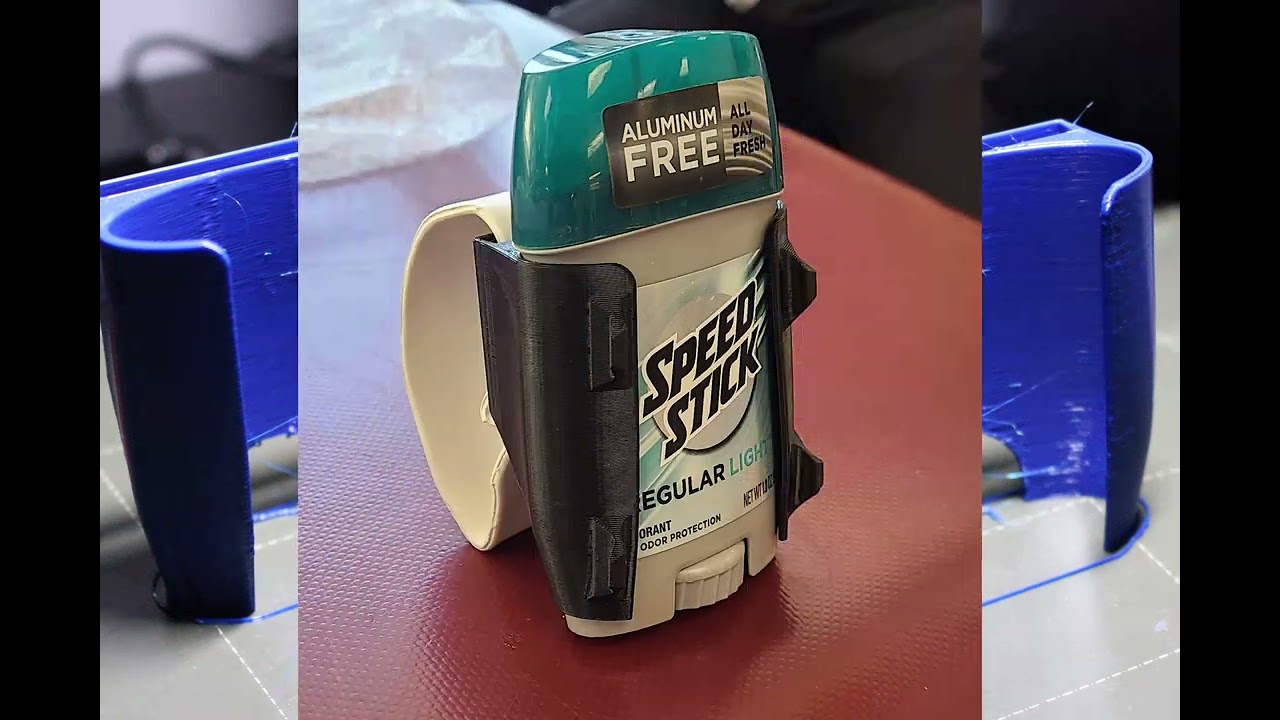
  • Unique solutions co-created with external partners, including prototypes like adaptive cornhole hooks and specialized holders for everyday items (e.g., deodorant holder) to enhance functional ability.
  • Various 3D-printed assistive devices to aid with dressing, cooking, and personal care, many of which are designed from scratch in direct collaboration with patients and clinicians.

Award‑winning innovation, grounded in everyday need

The work within the AT Workshop has earned multiple top prizes from the Academy of Spinal Cord Injury Professionals’ (ASCIP) Innovation Lab. Award‑winning creations — like a 3D‑printed deodorant holder, a head‑operated snack feeder, and an adaptive hair straightener — prove that practical, low‑cost innovations can dramatically improve quality of life.

Video Poster

Fast-tracking innovation

Our multidisciplinary approach to developing rehabilitation solutions and testing is playing a growing role in commercialization and industry collaboration. Shepherd Center works with partners like Georgia Tech to vet and scale homegrown technologies for broader impact — leveraging machine shops, intellectual property offices, and assistive technology expos to move ideas from prototype to market.

Meet the AT Workshop team

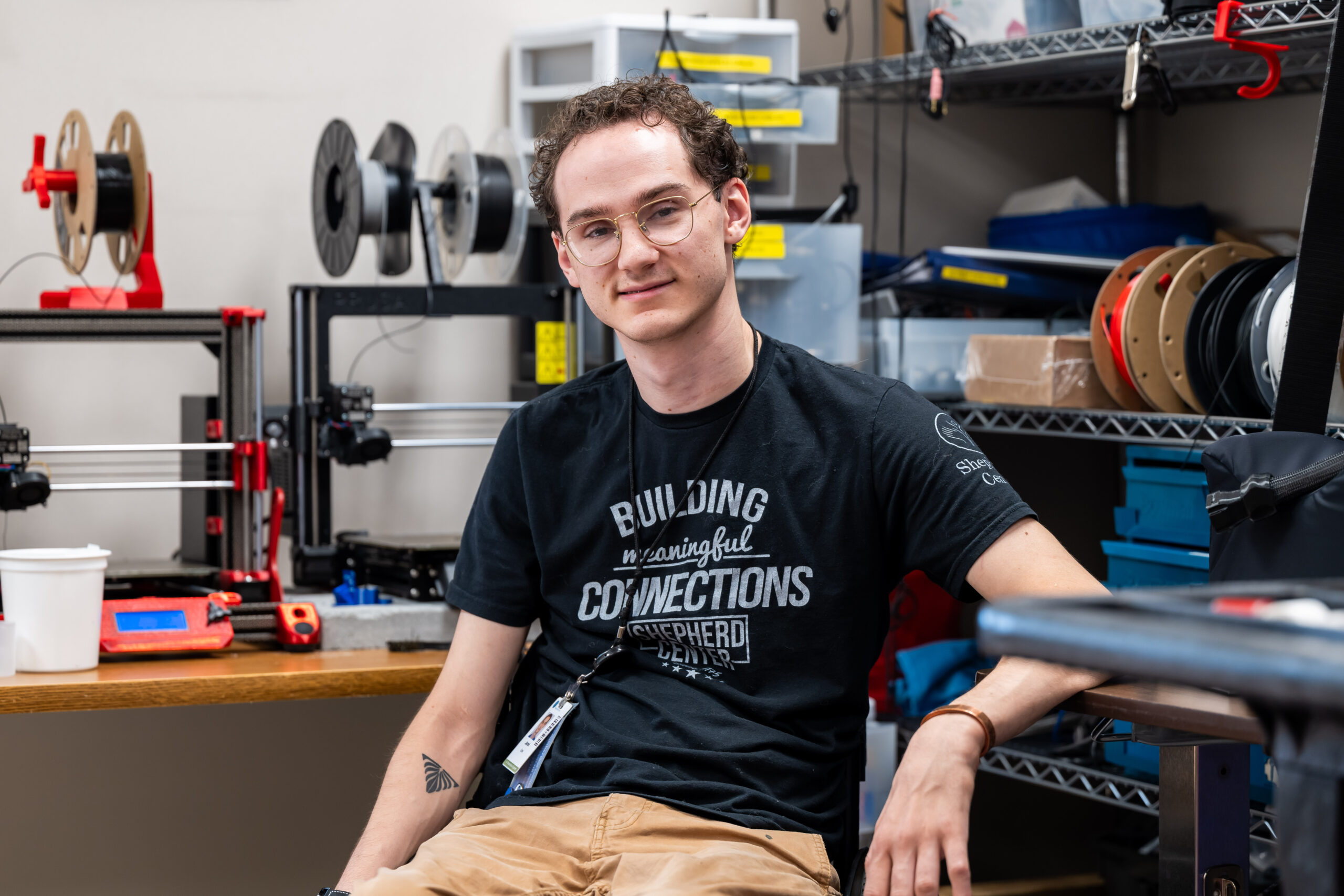
As Shepherd Center’s first rehabilitation engineer, and a former patient himself, Jared Grier brings firsthand empathy and mechanical expertise to adaptive design. Since joining in 2021, he has transformed the Center’s ability to create custom solutions — from mobility aids to daily living tools — giving patients greater independence when commercial products fall short.

I’ve met a lot of rehab engineers, but I haven’t met very many who have the same first-person experience that I do as a former patient, which plays a good role in my intuition and how I see and solve problems.

Jared Grier Rehabilitation Engineer